

A mountain landscape can be captivating in a photo and still not be the best choice for your trip. Sometimes the problem isn't the beauty of the place, but everything else: how to get there, how much actual time it requires, what happens if the weather turns, or if the nearest base is too far for the way you travel. That is why, before deciding if a beautiful mountain is a good fit for you, it is worth looking at more than just the panoramic view.
This guide is intended for independent travelers who organize their own routes and want to make a sensible decision without losing the inspirational part of the trip. The idea is simple: compare, filter, and choose. If you are looking for views, solitude, trails, or a more remote getaway, not all mountains will give you the same experience or require the same level of planning.
What you are really deciding when you choose a mountain
On a mountain trip, you are not just choosing a destination. You are choosing a combination of four factors: landscape, accessibility, logistics, and safety margin. When one of those elements does not fit with the others, the plan becomes fragile. It may still be beautiful, but it will no longer be practical.
For example, there are very photogenic mountains that work perfectly for a short getaway from a comfortable base. Others are more suitable for travelers who accept long journeys, fewer services, and more dependence on the weather. And then there are those that do offer a memorable experience but require previous experience, good physical condition, or, at the very least, very careful planning.
The key is not to confuse desire with fit. Seeing a spectacular mountain does not mean it is the best option for your time, your budget, or your way of traveling.
If you are looking for views, solitude, or trails, you need something different
A useful way to decide is to start with what you are really looking for. Not from the mountain in the abstract, but from the type of experience you want to have there.
| If you are looking for… | You should choose… | Avoid… |
|---|---|---|
| Wide views and a clear visual experience | A mountain with accessible viewpoints, well-marked paths, and a nearby base | Itineraries with too many transfers or uncertain access |
| Solitude and a sense of refuge | A more remote area, with less infrastructure and more time to stay | Very touristy destinations on weekends or holidays |
| Trails and hikes | Signposted routes, manageable elevation gain, and a distance consistent with your level | Confusing the beauty of the landscape with the ease of the route |
| A short but intense trip | A mountain with relatively simple arrival and a functional base | Long journeys that force you to rush too much |
| A remote destination to disconnect | An environment with few services, good forecasting, and extra days in case the plan changes | Being tight on time and depending on a single connection |
This filter seems obvious, but it saves mistakes. Not all mountains serve the same travel intention. And, especially for digital nomads in search of remote destinations, the combination of coverage, transport, accommodation, and weather can be more important than the mountain itself.
How to evaluate accessibility and logistics without getting lost in details
When you like a mountain, the least glamorous part is also the one that most protects your trip: logistics. There is no need to overcomplicate everything here, but you do need to review enough to know if the destination fits your way of traveling.
1. See how you really get there
Don't just stick to the name of the destination. Check if the starting point is near an airport, a station, or a reliable road. Sometimes the mountain is beautiful, but reaching the valley implies several transport changes, scarce schedules, or a final leg that only works well if you rent a car.
If you travel independently, this part largely defines the experience. A very nice plan can stop being so if it forces you to improvise late-night arrivals, expensive taxis, or tight connections.
2. Choose a base before a summit
For most independent travelers, the right question is not just “which mountain am I going to see?”, but “where should I sleep?”. A good base solves much of the trip: it lets you store luggage, have breakfast without rushing, leave early, and have a plan B if the day takes a turn for the worse.
If you are looking for scenery with little logistical effort, a nearby base is usually better than chasing an exact point in the middle of the mountain. That choice reduces travel and gives you flexibility to adjust your pace.
3. Check the season and weather with a buffer
The season completely changes the experience. A beautiful route in summer can be tough or simply impractical in the cold season. And the opposite also happens: there are mountains that look cleaner, emptier, and more memorable outside of peak flow months, even if they require more attention.
That is why it is worth checking what happens on the specific date you want to travel: rain, snow, heat, closures, road access, and, if applicable, possible permits. In the mountains, the date is not a detail. It is part of the destination.
4. Read signs carefully and download maps before leaving
If your trip includes trails or access routes, do not assume everything will be clear on the ground. As this guide from TuPiq reminds us, it is advisable to download the full map and the track before leaving, in addition to knowing how to interpret basic signage. A sign or a route marking can save you a long detour, especially if you arrive in the area with little light or poor coverage.
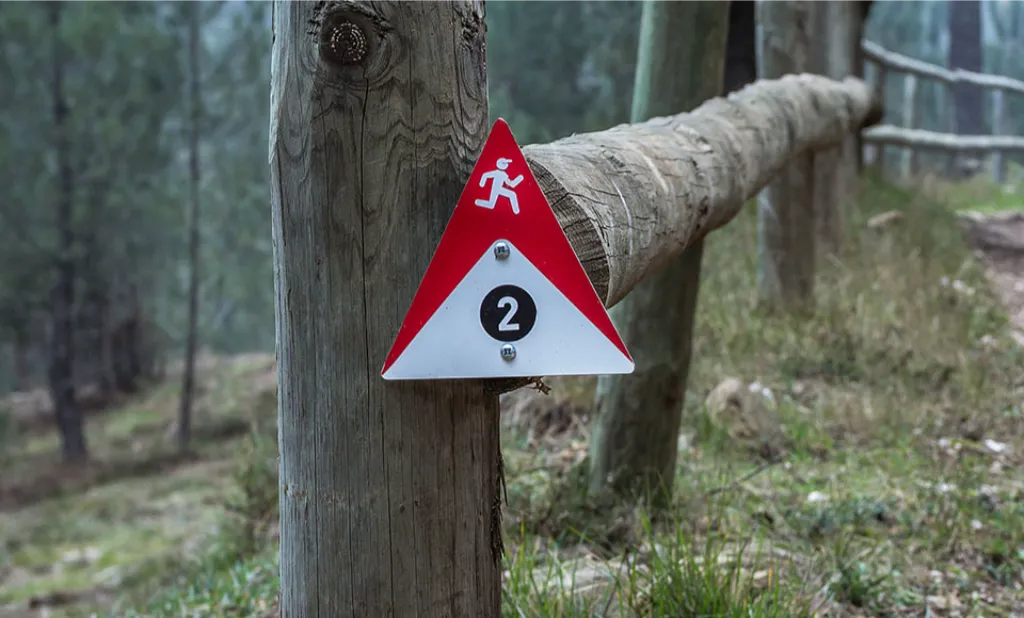
This is especially useful if you travel alone or if you don't want to depend on fixed tours. In that case, the mountain has to be clear, not just pretty.
Common mistakes when choosing a mountain for a trip
Many plans fail for the same reasons. The good news is that almost all of them can be detected before booking. In fact, several of the most common mistakes discussed in mountain circles also appear in the way trips are organized: skipping stages, underestimating the terrain, or not looking at the actual time a route requires.
- Choosing by the photo and not by the access. A spectacular view does not make up for a chaotic or overly long arrival.
- Confusing distance with difficulty. As a guide from Carreraspormontana.com points out, in the mountains, the terrain completely changes the experience; eight kilometers can be smooth or very hard depending on the elevation gain.
- Skipping stages. Moving from a simple getaway to a remote area without prior experience usually generates stress, not enjoyment.
- Not leaving a buffer for the weather. If your itinerary does not allow for changes, you are too dependent on everything going perfectly.
- Not checking equipment or services. In some areas, you need to plan for water, clothing, transport, or even advance lodging reservations.
If you correct these five points, you are already better off than the majority. And you don't need to become overly technical: it is enough to think of the trip as a chain of small decisions that have to work together.
How to choose based on your level and your time
This is where the decision becomes truly useful. The question is not whether the mountain is pretty, but what type of getaway it allows you to have without forcing the plan. The reference to level matters more than it seems: this guide reminds us that preparation, the right equipment, and, in some cases, having a guide make the experience safer and more fluid.
Translated to independent travel, that means this:
- If you have little time, prioritize simple access and a comfortable base.
- If you have medium time, look for routes or viewpoints that justify two or three nights.
- If you want a remote experience, accept more logistics, more margin, and less improvisation.
It also helps to think of the trip in layers. First, you decide if the mountain fits your organizational level. Then you choose the season. Then the base. And finally, the plan of routes or activities. Doing it backward usually leads to forced bookings.
Planning mistakes to detect before booking
There are early signs that a mountain is not a good fit. If several appear at once, it is better to change your mind or adjust the plan before committing.
- You need too many transfers to get to the starting point.
- The most logical accommodation is far from what you wanted to do.
- You cannot find clear information about seasons, permits, or closures.
- Your schedule does not leave room for a day of bad weather.
- The experience requires more physical effort or more exposure than you expected.
When that happens, it does not mean the destination is bad. It means that it might not be the right destination for that specific trip.
Three standard itineraries to decide faster
If you prefer to move from theory to a practical decision, this trio of options usually works well for independent travelers. Think of them as three levels of fit, not as rigid categories.
Short getaway
Ideal if you only have 2 or 3 days. Here it is advisable to have a mountain with simple access, a nearby base, and one or two panoramic hikes. The priority is to minimize friction: arrive, sleep, go for a hike, and return without depending too much on luck. It is the safest option for a first time.
Medium getaway
Works best with 4 to 6 days. It allows you to combine a reasonable arrival journey with a main route and some secondary activity, such as a valley, a viewpoint, or a nearby gastronomic area. It is the most balanced point between inspiration and logistics.
Remote getaway
Requires 7 days or more, or at least a clear willingness to move slowly. Herein lie the most isolated mountains, environments with fewer services, and destinations that are truly enjoyed when you don't have a tight schedule. They are the favorites of many digital nomads in search of remote destinations, but also the ones that penalize improvised planning the most.
How to decide in 10 minutes before planning
If you need a quick answer, use this filter. It is not perfect, but it helps you separate the mountains that inspire you from those that really fit your trip.
- Define what you want most: views, trails, solitude, or disconnection.
- Check how many actual days you have, not the ones you would like to have.
- Look at how to get there and if you need a car, taxi, or several changes.
- Check the best season and the risk of unstable weather.
- Evaluate if the nearby base allows you to move with comfort.
- Think about whether you want a short, medium, or remote getaway.
- Look for signs of difficulty: elevation gain, terrain, orientation, and safety.
- Check if the plan allows for an extra day in case something changes.
- Observe if there is good local information about routes and access.
- If you doubt three or more points, the destination probably does not fit yet.
This method does not tell you which mountain is the prettiest. It tells you which one fits your trip best. And that, in the end, is what prevents frustration.
Choosing a mountain well is not about looking for the most spectacular option at all costs, but the one that allows you to truly enjoy it. If you are putting together your route and want to combine inspiration with clarity, the best plan is usually the most realistic: a mountain that looks good, is easy to reach, and is lived without rushing. If it helps you to think about the trip this way, our PDF travel guides can be a good starting point for organizing your next getaway with more safety and less improvisation.


